You're not baking for you
Your signature item shows people what you can do. Your dependable sellers pay for the tent. Those are two different jobs.
Most of the things I've built didn't start with me deciding to build something. They started with a question.
A member asks me something. I answer it. Then I start researching, because I want to make sure I'm giving them something useful. The answer gets longer. Maybe it becomes a post, then a blog article, maybe a newsletter.
Every once in a while I look up and realize there's enough there for a book. That's how all six of mine happened. I've never sat down and said, "today I'm going to write a book." They accumulated. One question, one lesson, one problem solved at a time.
That's exactly how this week's entry started.
What cookies are you selling, and why?
One of our newer members in From Oven to Market is working on turning what she already bakes into a business. Cookies are part of what she sells.
So I asked her two questions. How are you pricing your cookies? And then: What cookies are you baking?
That second question matters more than it sounds.
Here's the thing I've watched over and over, with bakers and back in my Fox days working with small businesses in advertising. People build their product line around what they like.
That makes perfect sense when you're baking at home. It's a bad strategy when you're selling to strangers.
I had this same conversation with my daughter
My daughter Payton makes a baked ziti she loves. She also likes things considerably hotter than I do.
One day she was making that ziti for a dinner party, telling me about all the crushed red pepper going into it. I told her, "Payton, you're not making dinner for you."
You're making dinner for a room full of people whose palates you don't know. You can always put more heat on your own plate. You can't pull it back out once everybody's sitting at the table.
If you want people eating your food instead of politely moving it around the plate, make the main dish work for the greatest number of people. Then let the ones who want more heat add it.
Farmers markets work the same way.
Your signature recipe and your business are two different things
I love a creative bake. Work on the strange cookie. Develop the bread nobody else has. Make something completely yours. That's part of being a baker, and who knows, you might create the next thing everybody wants.
But I wouldn't build an entire market table around culinary experimentation.
Your signature item shows people what you can do. Your dependable sellers pay for the tent.
A good market menu needs products customers already understand, already want, and can make a buying decision about in about three seconds. Then you put your creative item beside them. Let the familiar products earn trust. Let the signature product create curiosity.
So I went looking at cookies
There isn't a national database telling us which cookie flavor sells most at every farmers market in America. What we can look at is working cottage bakers, market menus, seller conversations, bakery lineups, and the flavors that keep appearing again and again.
Something interesting happens. The wildest flavors don't dominate. The classics do.
In cottage baker discussions, brown butter chocolate chip keeps showing up as a strong seller, alongside cookie butter, chocolate chip, and other recognizable standards. One cottage baker told me it plainly: her basic cookies were among her best sellers.
That reinforces something I've believed a long time. Customers don't necessarily want strange. They want familiar done really well.
| Rank | Cookie | Why it belongs on the table |
|---|---|---|
| 1 | Brown Butter Chocolate Chip * | Everybody knows chocolate chip. Brown butter, good chocolate, and flaky salt make it yours. |
| 2 | Peanut Butter * | Familiar, inexpensive to produce, instantly recognizable. |
| 3 | Snickerdoodle * | Cinnamon sugar gives a non-chocolate option without asking the customer to take a risk. |
| 4 | S'mores | Chocolate, marshmallow, graham cracker. Sells with its eyes first. |
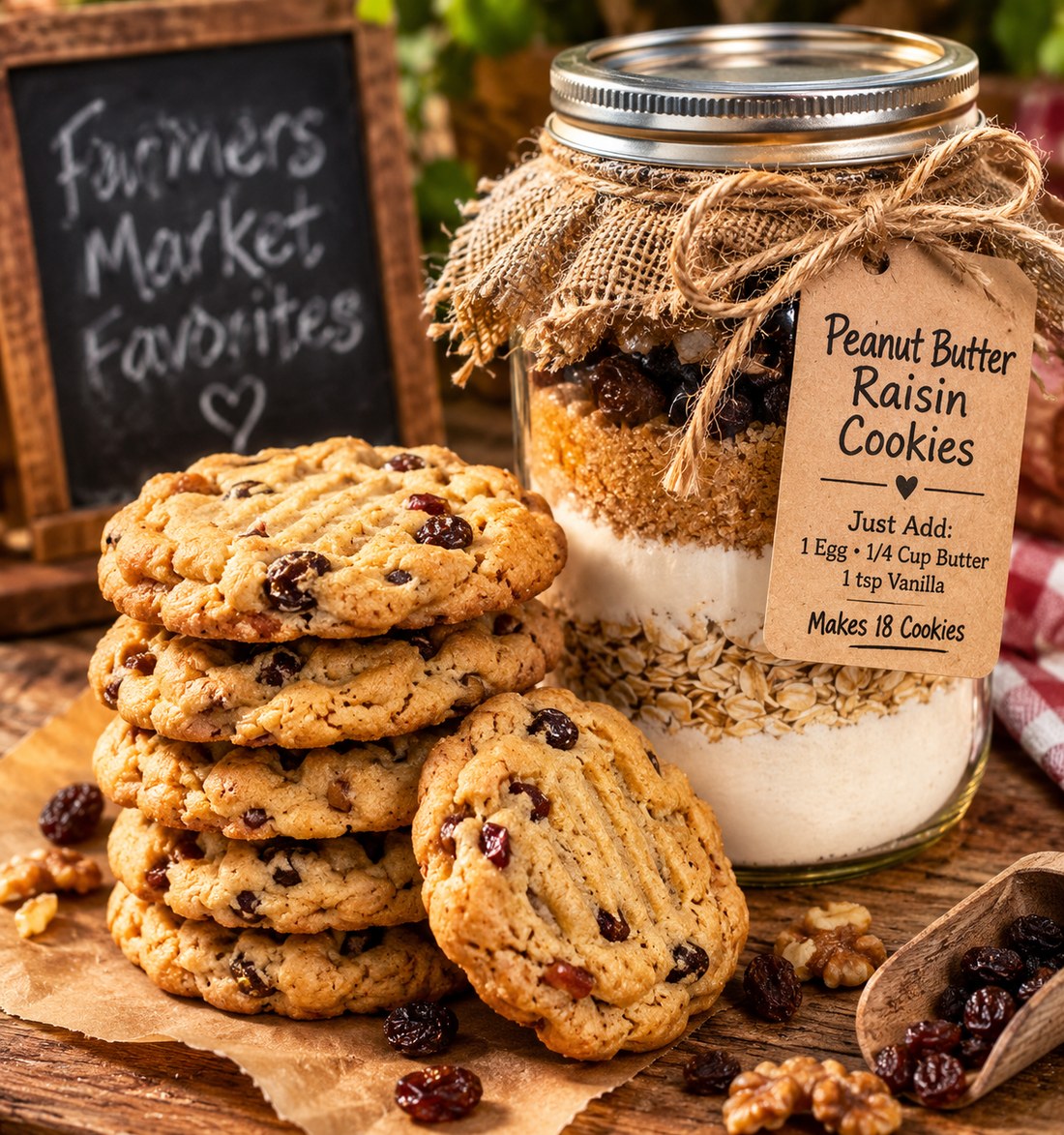
| 5 | Oatmeal Raisin * | Still a strong traditional choice, and it gives your table range. |
| 6 | M&M Monster | Colorful and familiar, especially good at family-heavy markets. |
| 7 | Double Chocolate * | For the customer who asks which one has the most chocolate. |
| 8 | Cookie Butter / Biscoff | Familiar enough now to feel safe, different enough to feel premium. |
| 9 | Toffee Chocolate Chunk | A small step past chocolate chip without wandering off. |
| 10 | Cookies & Cream | Recognizable, highly visual, easy to sell to kids and adults both. |
* The five I'd carry every week.
I wouldn't carry all ten. I'd carry five dependable cookies and rotate one. The five starred above, plus whatever came out of your head that week. Consistency without a boring table.
Familiar flavor. One memorable upgrade.
This might be the bigger lesson. You don't have to invent a new cookie every week. Take something people already want and give them one reason to remember yours.
Chocolate chip gets brown butter and flaky salt. Peanut butter gets roasted peanuts. Snickerdoodle gets a little cardamom in the cinnamon sugar. Oatmeal raisin gets toasted walnuts. Chocolate gets better chocolate.
That's enough. You're reducing the customer's risk while still giving them something the grocery store can't.
Then I started thinking about the jar
This is where my brain usually wanders off. If the cookie already sells, what else can that same recipe become?
Holiday season gives you an easy answer. Cookie mix in a jar.
Layer the dry ingredients in a mason jar. Flour, brown sugar, sugar, oats if the recipe calls for them, chocolate chips, whatever makes sense for that cookie. Put the baking instructions on a tag. Tie a ribbon around it.
Now set that jar directly beside the finished cookies.
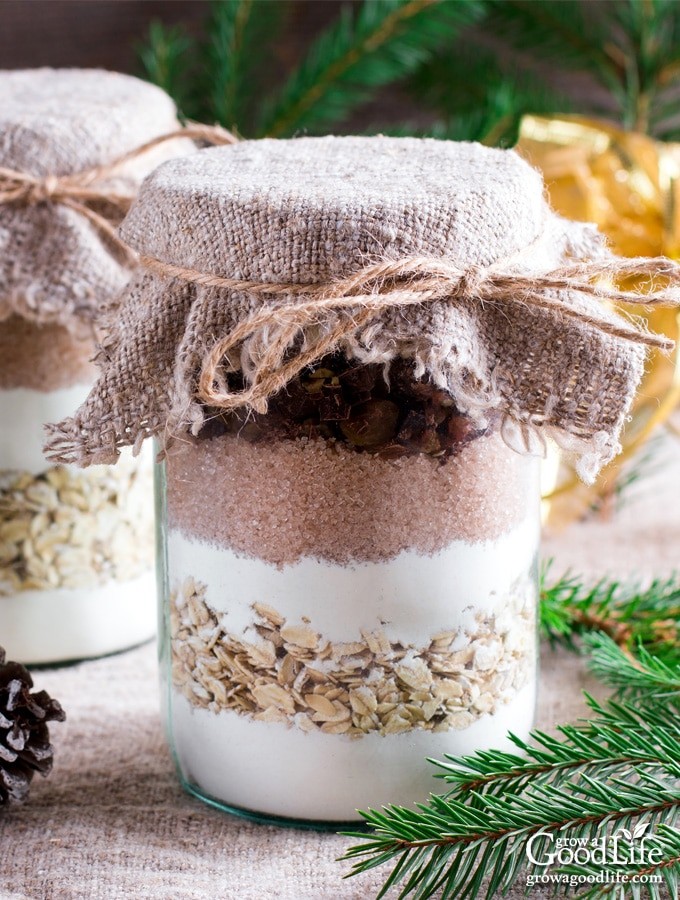
You're not selling an abstract idea anymore. They already know what the jar makes.
One recipe just became two products. And potentially two transactions. They buy six cookies for home and two jars for Christmas gifts.
That's how I want a baker thinking at a market. Not "Will people spend that much?"
Look down the aisle.
| Barbecue sandwich, two tents down | $9 |
| Fries | $4 |
| Lemonade | $3 |
| What one customer spent on lunch before reaching your table | $16 |
| Times they asked that vendor to justify the price | 0 |
| Times you talked yourself out of your own price | every market |
| Times you actually asked for the sale | 0 |
The money was already walking the aisle. They spent it two tents down without blinking. Price was never your problem.
Your job isn't deciding whether your customer can afford your product. Your job is giving them a good enough reason to buy it. Sometimes the biggest sales problem isn't the price. You never asked for the sale.
And meanwhile, I'm making this thing
Which brings me to exactly why I'm telling you not to confuse creativity with your core menu. Because while I was researching the cookies people actually buy, I was in my own kitchen doing the opposite.
I wanted peanut butter. I wanted raisins. And for whatever reason, I kept thinking banana belonged somewhere in the background.
Not banana cookies. Peanut butter cookies with just enough banana aroma that you stop for a second and wonder what you're tasting.
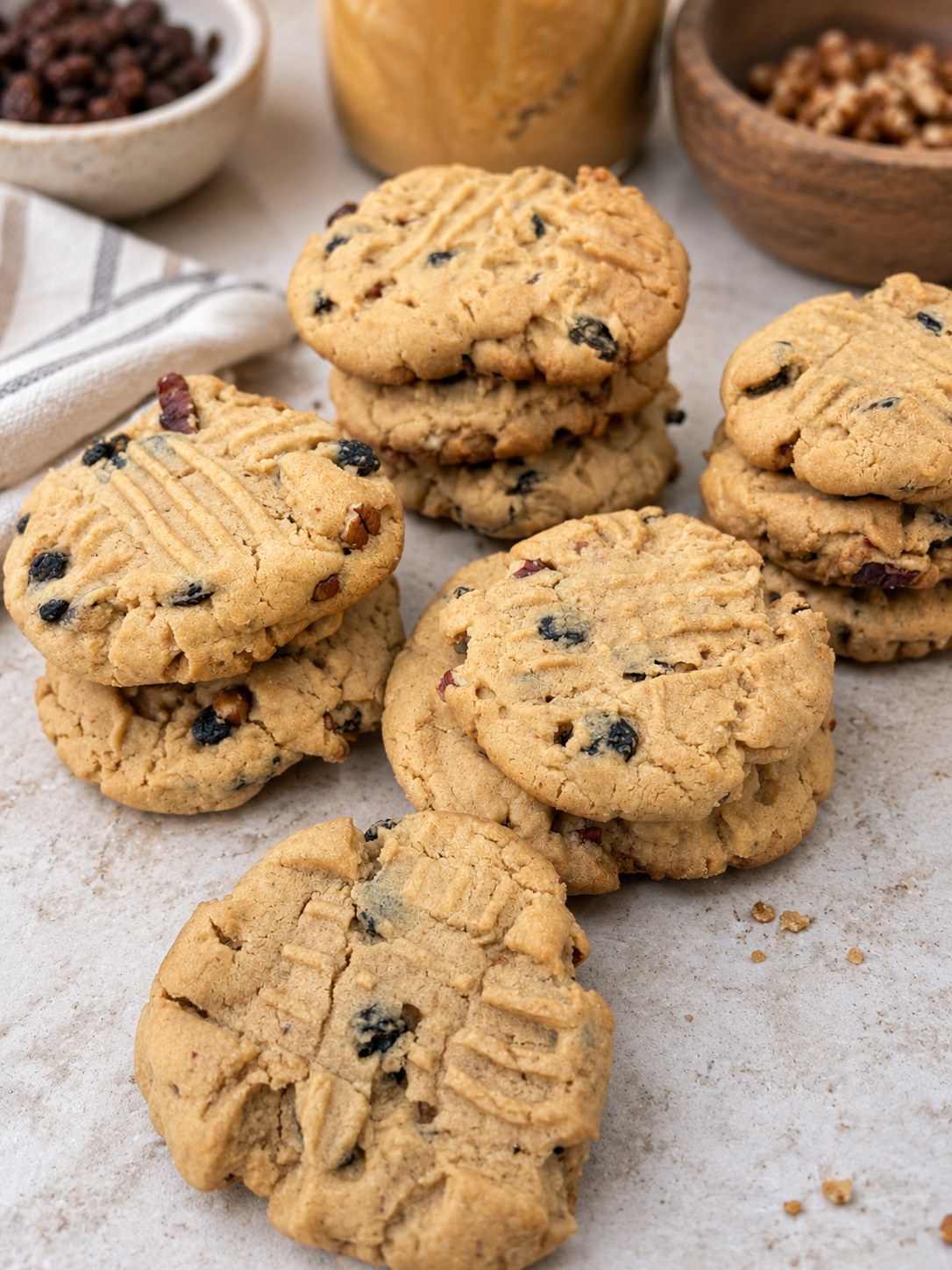
Peanut Butter Raisin Cookies with a Hint of Banana
Equipment: stand mixer or hand mixer, 40 g cookie scoop, digital scale, sheet pans, parchment.
Dough
- 170 g (2/3 cup) creamy peanut butter
- 115 g (1/2 cup, 1 stick) unsalted butter, softened
- 120 g (1/2 cup plus 1 tbsp, packed) light brown sugar
- 70 g (1/3 cup) granulated sugar
- 1 large egg, about 50 g
- 1/4 tsp banana extract, about 1 g
- 180 g (1 1/2 cups) all-purpose flour
- 1/2 tsp baking soda
- 1/2 tsp baking powder
- 1/2 tsp fine salt
- 100 g (2/3 cup) raisins, weighed dry, then plumped
- 50 g (1/2 cup) chopped walnuts, optional
Method
- Soak the raisins in hot water for 10 minutes, drain, and dry them really well before they go anywhere near the dough.
- Cream the peanut butter, butter, and both sugars until light and fluffy, 2 to 3 minutes.
- Beat in the egg and the banana extract.
- Whisk the flour, baking soda, baking powder, and salt separately, then add to the peanut butter mixture. Mix only until it comes together.
- Fold in the raisins and walnuts.
- Scoop into 40 g portions and leave them fairly tall. Don't flatten these with a fork.
- Chill the shaped dough 30 minutes.
- Bake at 350°F (175°C) for 10 to 12 minutes. Pull them when the edges are set but the centers still look a little soft.
- Leave them on the pan 5 minutes before moving them.
Go easy on the banana extract. It should sit behind the peanut butter. You shouldn't bite into this and think banana candy. And plump raisins are a completely different experience from the little chewy rocks you sometimes find inside a cookie.
The market cookies discussed above are in Recipe Pantry Pro.
Browse the Recipe PantryWould I build my market business around that cookie?
Nope.
I'd test it. I'd put it beside the chocolate chip cookie and let customers tell me what they think. Maybe everybody loves it. Maybe twelve people love it and everybody else reaches for chocolate chip. Either answer is useful.
That's the difference between cooking for yourself and selling food. Your opinion starts the recipe. The customer decides whether it becomes a product.
There's nothing wrong with making what you love. I hope you always do. Just don't confuse what you love with what the market has already told you it wants.
Do the research. Make the dependable products exceptionally well. Then save a little corner of the table for the thing that came out of your head at six in the morning.
Sometimes that little corner turns into something much bigger. I've got six books that started pretty much the same way. One question at a time.
Every cookie on that list has to be tested before it earns a spot on your table, and testing is easier when somebody else already did the failing. The Pantry is 146 recipes, weighed in grams, baked by thousands of people who tell me when something is off. No ads, no pop-ups, no scrolling past a life story to reach the flour.
Browse the Recipe Pantry
The table pays for itself before the signature cookie does
Five dependable cookies and one rotating experiment is a menu decision, and menu decisions are business decisions. So is what you charge, how you package it, and whether the jar sits beside the cookies or in a box under the table.
That's the work we do inside From Oven to Market. Pricing, product mix, packaging, and how to actually ask for the sale when the money is already walking down the aisle.
Take the quiz
Perfection is not required. Progress is.Henry ⭐🔥