The mill on the counter
Nine bags of beautiful grain, one new mill, and a lot to learn.
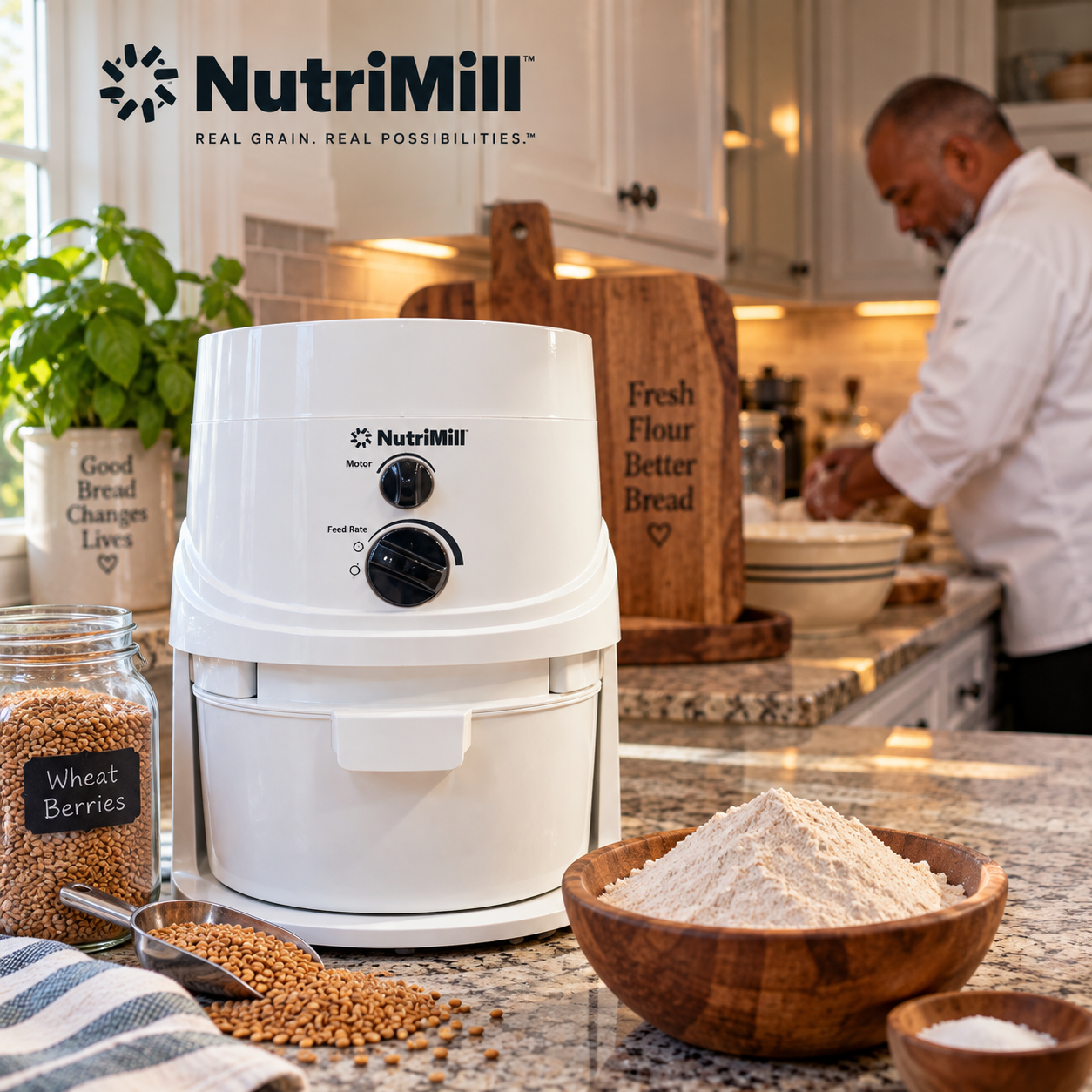
The first thing I milled in the NutriMill was rice.
Not wheat. Not one of the ancient grains waiting in nine heavy bags beside it. Rice.
That may sound like an odd beginning, but I started with a batch of rice to clean the mill before its first use. So I poured the rice in, turned on the machine, and waited to see what this new piece of gear could really do.
Rice went in. Rice flour came out.
And I stood there grinning.
I’ve milled flour before. I owned a Mockmill, and I liked it. That’s a stone mill. Grain passes between two milling stones, and adjusting the gap lets you change the texture of the flour.
The NutriMill is different.
This one is an impact mill, using high-speed stainless steel milling heads to break the grain apart. As I watched that first batch of rice become flour, I started thinking about everything else I’m about to put through it.
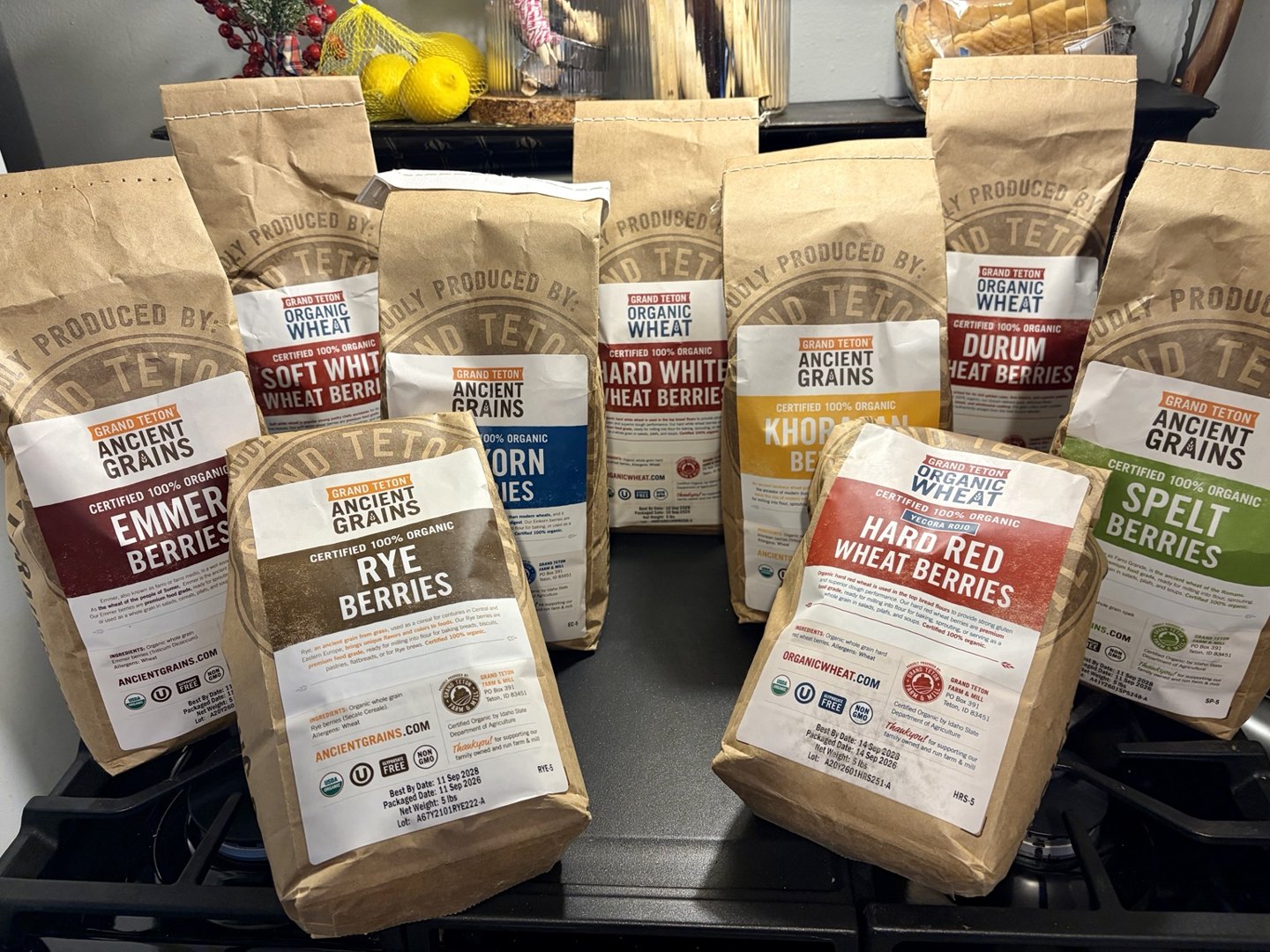
Grand Teton Ancient Grains sent me nine bags of wheat berries and grains, and they are beautiful: emmer, rye, einkorn, khorasan, spelt, durum, hard red, hard white, and soft white.
Heavy bags. Real grain. The kind of thing that makes you stop and think, “Alright, now I need to be a good steward of this.”
Because that’s part of it too.
This isn’t just about milling flour. It’s about learning how to store grain, how to choose the right grain for the right bread, how much water each flour wants, what changes when the flour is fresh, and how to make good decisions with a system that isn’t yet fully familiar.
This week’s bake-along already connects to that. We’re using a scald, which means pouring boiling water over grain, cereal, or flour so it can soften and hold moisture before it goes into the dough.
That’s where we’re headed.
I’ve also started building out the fresh-milled side of Recipe Pantry, including an Ancient Grains section with recipes and resources for bakers working with fresh-milled flour. You can find it here: Recipe Pantry Fresh-Milled & Ancient Grains.
I also built The Mill, a companion app to help bakers work more confidently with fresh-milled flour. You can open it here: The Mill.
I’ll be chronicling a lot of this inside the community, as always. But Henry’s Notebook gives me a little more room to breathe.
The community moves fast. Some days there are thirty-seven conversations happening at once, and that’s a good thing. But here, I can slow down a little. I can tell you what I’m learning, what surprised me, and what I’m still figuring out.
So if you feel like you missed something, you can always pick this up on Thursdays.
That’s the journey we’re going on.
I’ve got the mill on the counter, nine bags of the most beautiful wheat berries I’ve ever seen, and a lot to learn.
Here we go.